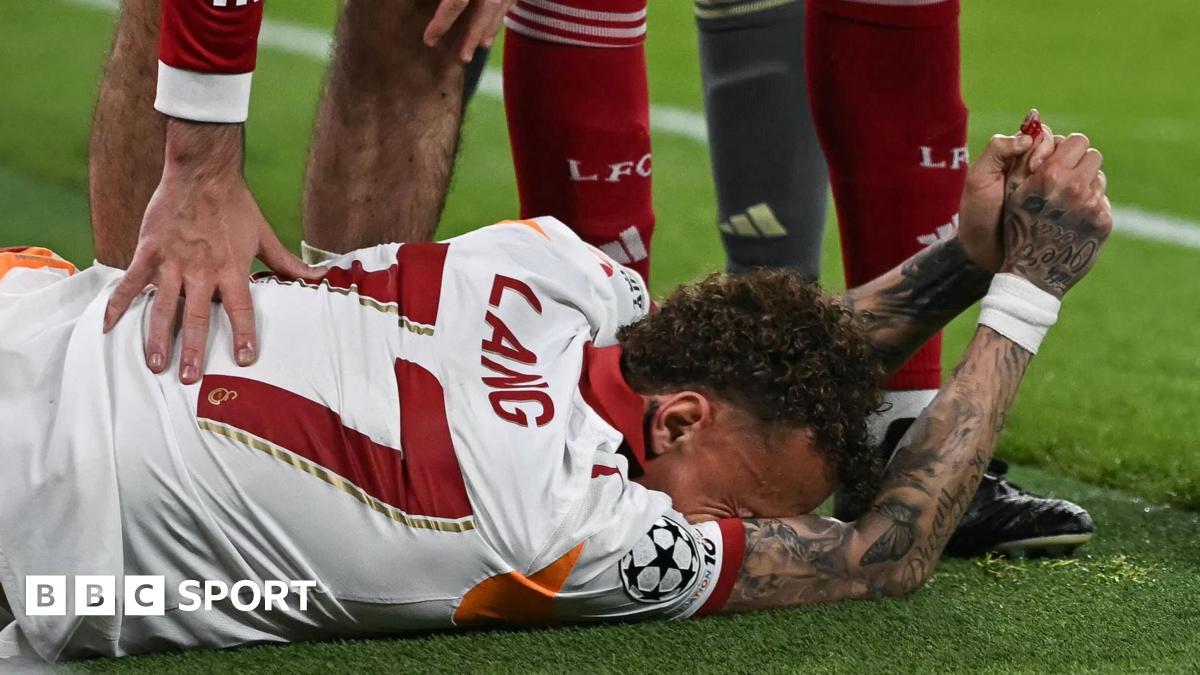
The beautiful game of football often delivers moments of exhilaration, breathtaking skill, and fierce competition. However, it also, at times, reminds us of its inherent dangers, where even the most seemingly innocuous contact can lead to devastating consequences. Such was the case during the recent UEFA Champions League clash between Liverpool and Galatasaray, where a terrifying incident saw Turkish club winger Noa Lang suffer a severe and concerning detached finger injury. What began as a tense battle on the hallowed Anfield turf quickly turned into a scene of grave concern for player welfare, drawing a collective gasp from fans and players alike.
The unfortunate event, which saw the 26-year-old Dutch international rushed to hospital, has cast a somber shadow over an otherwise high-stakes encounter. Lang's injury highlights the brutal physical demands placed on modern footballers and the often-overlooked risks associated with pitch-side infrastructure. This article delves into the details of the incident, the medical implications of such a severe injury, the arduous road to recovery, and the broader conversations it sparks about player safety in elite football.
The Incident: How Noa Lang's Finger Injury Unfolded at Anfield
The Champions League Round of 16 second leg between Liverpool and Galatasaray was always poised to be an enthralling affair. With Galatasaray trailing 1-0 from the first leg, the Turkish giants arrived at Anfield with a clear strategy: frustrate Liverpool, break up play, and look for their moments. The early stages saw Galatasaray employ what some described as 'Machiavellian tactics,' including perceived time-wasting and players going down easily, much to the frustration of the Liverpool faithful and manager Arne Slot.
Dominik Szoboszlai's 25th-minute goal brought some relief to the home side, before Hugo Ekitike, Ryan Gravenberch, and Mohamed Salah ran riot in the second half, securing a dominant 4-0 victory for Liverpool. However, amidst the goal celebrations and tactical battles, a horrifying moment unfolded in the 80th minute that momentarily silenced the roar of Anfield and shifted focus entirely to player welfare. Noa Lang, in a desperate attempt to keep the ball in play or perhaps caught in a challenge, clattered into the pitch-side advertising hoardings.
The impact was severe. Lang immediately fell to the ground, writhing in excruciating pain, clutching his hand. It quickly became apparent this was no ordinary knock. Medical staff from both teams rushed to his aid, their faces etched with concern. The winger's hand appeared to have been caught in the unforgiving structure of the advertising boards, resulting in a gruesome Noa Lang Finger Injury. The sight was distressing enough to prompt applause from sections of the crowd and players once the gravity of the situation was understood, a testament to the universal concern for a fellow professional's well-being. Lang was eventually stretchered off, still visibly in discomfort, and was immediately transported to a local hospital for urgent treatment.
Medical Response and Initial Diagnosis: A Race Against Time
The immediate medical response on the pitch was swift and critical. Team medics wasted no time in assessing Noa Lang's condition, recognizing the severity of the injury almost instantly. Galatasaray manager Okan Buruk confirmed the gravity of the situation in a tunnel interview, stating, "Noa Lang has a very serious injury on his finger. He will go to the hospital here." This immediate transfer to a medical facility is paramount in cases of severe trauma, especially when dealing with a detached digit.
Initial reports from sources like ESPN and NOW TV Turkey quickly confirmed the worst: Lang had suffered a detached finger injury and would require surgery. While "detached" can sound alarming, in medical terms, it often refers to a severe avulsion injury where soft tissues (skin, tendons, ligaments, nerves) are torn away from the bone, or in some extreme cases, a complete separation of the digit. The urgency of treatment for such an injury cannot be overstated. Timely intervention is crucial for increasing the chances of successful reattachment, preserving function, and minimizing long-term complications such as nerve damage, chronic pain, or stiffness.
The surgical procedure for a detached finger involves meticulous work, often requiring micro-vascular techniques to reconnect tiny blood vessels, nerves, and tendons. The goal is not just to reattach the finger but to restore as much natural movement, sensation, and strength as possible, which is particularly vital for a professional athlete whose livelihood depends on the full functionality of their body.
Understanding a Detached Finger Injury: What It Means for an Athlete
A detached finger injury goes far beyond a simple sprain or fracture. For a professional footballer like Noa Lang, whose hands are vital for balance, shielding the ball, and even minor interactions like throw-ins or managing their kit, the impact is significant. Medically, a "detached finger" can encompass a spectrum of severe trauma:
- Avulsion Injuries: Where soft tissues (skin, ligaments, tendons) are violently torn away from their attachment points, often exposing bone.
- Amputation/Replantation: In the most severe cases, the digit might be completely severed, requiring complex replantation surgery.
- Complex Fractures with Soft Tissue Loss: The injury might involve a severe bone fracture alongside extensive damage to surrounding tissues.
The surgery will likely focus on repairing the damaged soft tissues, meticulously rejoining nerves and blood vessels, and stabilizing any fractured bones. This is a highly specialized procedure, demanding precision and expertise from orthopedic or hand surgeons. The immediate aftermath involves immobilization to allow tissues to heal, followed by an intensive rehabilitation program.
For an athlete, the recovery is not just about healing the physical wound. It's about regaining fine motor skills, grip strength, and the confidence to use the hand without fear of re-injury. Any persistent stiffness, reduced sensation, or chronic pain could have a tangible impact on performance, affecting ball control, balance during sprints or tackles, and overall comfort on the pitch. The mental fortitude required to overcome such a gruesome injury and return to peak physical condition is immense.
The Road to Recovery: Noa Lang's Rehabilitation Journey Ahead
Noa Lang's journey back to the pitch will undoubtedly be a long and challenging one. Recovery from a complex detached finger injury typically involves several distinct phases, each crucial for optimal healing and functional restoration:
- Initial Healing & Immobilization: Post-surgery, the finger will be immobilized in a splint or cast for several weeks to protect the repaired tissues and allow initial healing. Pain management will also be a key focus during this period.
- Early Mobilization & Physiotherapy: Once the surgeon deems it safe, gentle, controlled exercises will begin under the guidance of a specialized hand therapist. The goal is to prevent stiffness, improve circulation, and gradually restore the range of motion. This phase is critical to prevent scar tissue from limiting movement.
- Strengthening & Dexterity: As healing progresses, exercises will intensify to rebuild strength in the hand and fingers, and improve dexterity. This might involve using therapeutic putty, grip strengtheners, and fine motor skill drills.
- Sport-Specific Rehabilitation: Before returning to full training, Lang will undergo sport-specific drills to ensure his hand can withstand the demands of professional football. This includes exercises simulating ball contact, falls, and general physical interaction without exacerbating the injury.
The timeline for such a recovery can vary significantly based on the exact nature and severity of the injury, as well as individual healing rates. It could range from a few months to even longer, especially if nerve regeneration is involved. For Galatasaray, this injury introduces an unwelcome complication, particularly given Lang's loan status from Napoli and the €30m option for a permanent transfer at the end of the season. His recovery trajectory will inevitably factor into their decision-making process. Fans eagerly awaiting updates on his progress can find more detailed projections in our article, Noa Lang's Recovery Timeline & Future Impact After Gruesome Injury.
Broader Implications for Player Safety and Advertising Hoardings
Noa Lang's gruesome injury reignites a perennial debate in professional sports: the balance between commercial interests and player safety, particularly concerning pitch-side advertising hoardings. These boards, a ubiquitous feature in modern stadiums, are a significant source of revenue for clubs and leagues. However, their proximity and rigid nature have long posed a risk to players, who, in the heat of the moment, can be propelled into them at high speeds.
While safety regulations exist, incidents like Lang's raise questions about their sufficiency. Should there be stricter guidelines on the minimum safe distance between the touchline and advertising structures? Should the materials used for these hoardings be softer, more pliable, or designed to absorb impact better? In other sports, such as motorsport or ice hockey, significant advancements have been made in barrier technology to protect athletes from high-speed impacts. Football, with its dynamic and often unpredictable nature, could certainly benefit from a similar re-evaluation of its pitch-side environment.
The incident serves as a stark reminder that even seemingly minor elements of stadium design can have life-altering consequences for athletes. Clubs, governing bodies, and sponsors all have a shared responsibility to ensure that the pursuit of commercial gain does not come at the cost of player well-being. A thorough review of existing safety protocols and an exploration of innovative, player-friendly alternatives for advertising hoardings should be a priority moving forward.
Conclusion
The Noa Lang finger injury at Anfield was a moment of profound concern that transcended the rivalry of a Champions League fixture. It was a stark reminder of the inherent risks faced by professional footballers and the critical importance of player safety. As Noa Lang embarks on what will undoubtedly be a demanding rehabilitation journey, the football world collectively wishes him a swift and full recovery. His resilience will be tested, but his determination to return to the pitch will surely be immense. Meanwhile, this incident should serve as a catalyst for ongoing discussions and potential reforms regarding pitch-side safety standards, ensuring that our beloved game continues to evolve with the welfare of its greatest assets – the players – at its very heart. For a deeper dive into the specifics of what transpired on that fateful night, read What Happened to Noa Lang? Galatasaray Star's Freak Finger Injury.